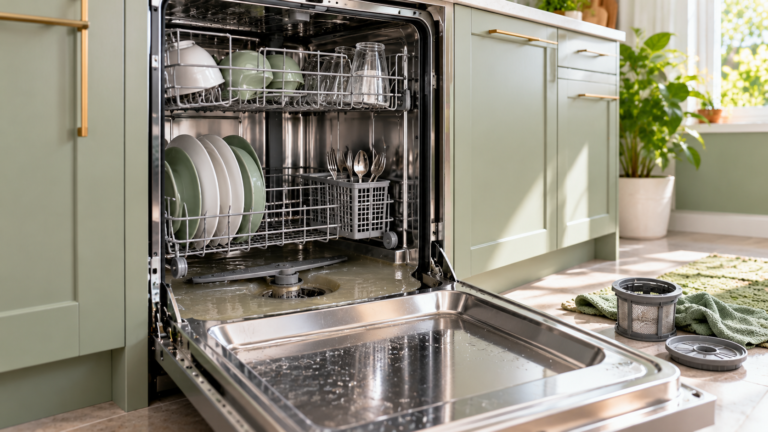

A dishwasher leak can come from the door seal, detergent, hose connections, or an internal component. Act quickly to prevent floor damage, but avoid using the dishwasher until you know where the water is coming from.
Before you start
- Stop the wash cycle and turn the dishwasher off.
- Dry standing water to reduce slip and electrical hazards.
- Turn off power at the breaker if water is near an outlet or electrical connection.
- Turn off the water supply if the leak is active or heavy.
1. Check the door seal
A dirty, damaged, or poorly seated door gasket can allow water to escape around the dishwasher door.
Safe checks to try
- Open the door and inspect the rubber seal around the edge.
- Remove food debris with a soft cloth and mild soapy water.
- Look for cracks, tears, or sections pulling away from the door.
- Check that dishes or racks are not blocking the door from closing fully.
2. Use the correct detergent amount
Too much detergent, hand soap, or the wrong cleaning product can create excessive suds. Suds may force water out through the door or vent.
Safe checks to try
- Use only detergent designed for automatic dishwashers.
- Do not use washing-up liquid or hand soap.
- Follow the detergent manufacturer’s dosage guidance.
- If there are many suds, cancel the cycle and allow them to settle before cleaning up.
3. Check the filter and spray arms
A blocked filter or damaged spray arm can affect water flow inside the dishwasher. In some cases, water may be directed toward the door seal or overflow area.
Safe checks to try
- Remove and rinse the dishwasher filter according to the appliance manual.
- Check that the spray arms can rotate freely.
- Look for cracks or loose parts on the spray arms.
- Make sure large dishes are not blocking the spray arms.
4. Inspect visible hose connections
If water appears underneath or behind the dishwasher, a supply hose or drain hose connection may be loose or damaged.
- Turn off the water supply before checking visible connections.
- Look for moisture around accessible hose fittings.
- Check for kinks, cracks, or crushed hoses.
- Do not pull the dishwasher out forcefully or disconnect plumbing if you are unsure.
5. Check whether the dishwasher is level
A dishwasher that is leaning forward or sideways may not seal or drain correctly. Check the appliance manual for the correct leveling method, or ask an installer or technician to adjust it.
When to call a professional
Arrange professional service if the leak continues after cleaning the seal and filter, water is coming from underneath the appliance, hoses are damaged, or there is any sign of an internal pump or valve fault. Stop using the dishwasher until the leak is resolved.
Bottom line
Start with the door seal, detergent type, filter, and visible connections. If water keeps appearing underneath the dishwasher or the source is unclear, professional repair is the safest option.
Refrigerator Leaking Water · Browse all appliance repair guides