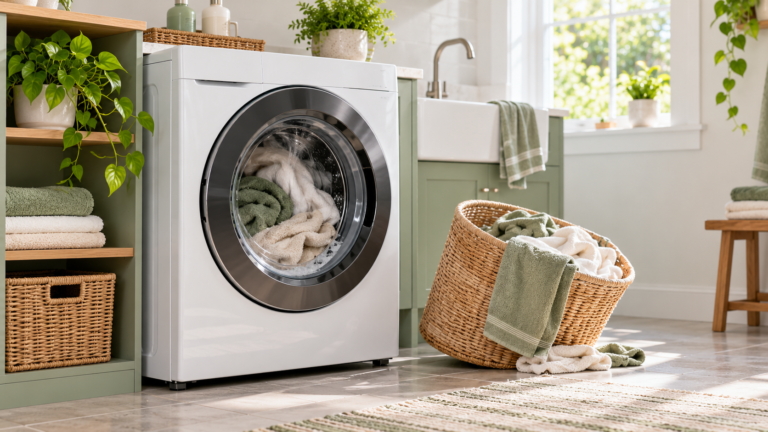

A washing machine that will not spin often has a simple cause: an unbalanced load, a lid or door that is not fully latching, or water that has not drained. Start with the safe checks below before moving on to anything more involved.
Before you start: keep it safe
Turn the washer off before reaching into the drum or checking the drain area. If you notice a burning smell, sparking, smoke, or a damaged power cord, stop using the appliance and arrange qualified service.
Quick checks that solve many spin problems
- Redistribute the load. Pause the cycle, spread heavy items evenly around the drum, and remove a few items if the machine is packed tightly.
- Check the lid or door. Close it firmly; most washers will not spin unless the safety lock engages.
- Choose a spin-capable cycle. Delicate, wool, rinse-hold, and no-spin settings may reduce or skip spinning.
- Wait for draining. Many machines will refuse to spin while water remains inside.
1. An unbalanced or oversized load
A single heavy item, such as a bath mat, duvet, or pair of wet jeans, can collect on one side of the drum. The washer may stop to prevent violent movement. Open the door only once the drum has stopped, rearrange the load, then run a spin cycle again. For one bulky item, add two or three small towels to help balance it.
2. The washer is not draining properly
If the drum is still full of water, focus on drainage first. Check that the drain hose is not kinked, crushed, or pushed too far into the standpipe. On front-load machines, a blocked pump filter is also common. Follow your model manual before opening a filter, keep towels ready, and expect trapped water to spill out.
If water is leaking while you investigate, see our water-leak troubleshooting guide for practical containment steps, then contact a technician if the washer’s leak is active or worsening.
3. A lid switch or door lock is not engaging
Top-load washers typically use a lid switch; front-load washers use a door-lock system. If the display shows a door or lid warning, clean away visible detergent residue and make sure nothing is caught in the seal or latch. Do not bypass these safety devices. A failed latch or switch needs proper diagnosis and replacement.
4. The machine is not level
Place a hand on each top corner. If the machine rocks, adjust the feet until all four make firm contact with the floor. A level washer is quieter, steadier, and less likely to stop during spin. Avoid placing it on a soft, uneven surface.
5. A belt, motor, or control fault
If the washer drains and locks correctly but the drum never turns, a worn drive belt, motor issue, control-board fault, or sensor problem may be involved. These repairs can require opening the appliance and testing electrical parts, so they are best handled by a qualified repair professional.
When to call a professional
- The washer makes grinding, screeching, or repeated banging noises.
- You smell burning, see smoke, or the breaker trips.
- Water remains in the drum after the basic hose and filter checks.
- The display repeatedly shows an error code or a door-lock warning.
- The appliance is leaking from underneath or moving sharply across the floor.
For more safe, step-by-step help, browse the AppliSage repair guides. A short check now can prevent a larger repair later.